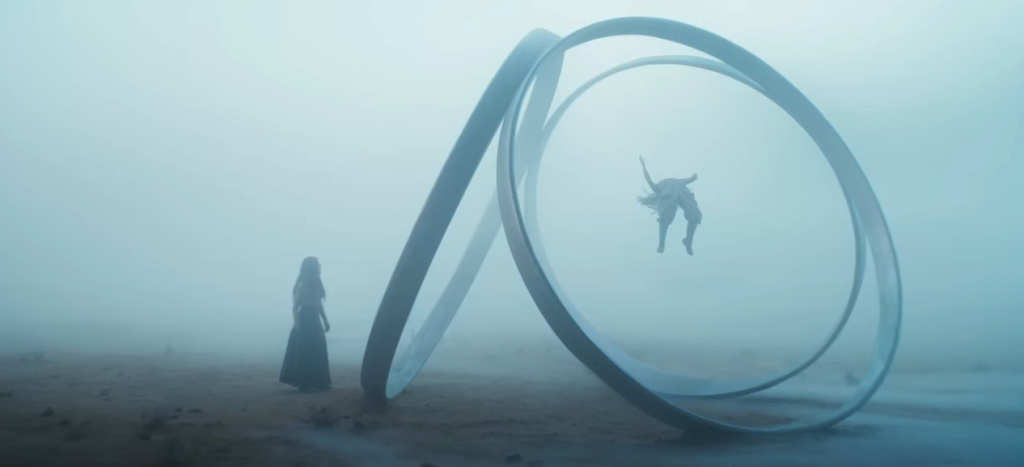
The Wheel of Time S03 Episode 4 “The Road to the Spear.”
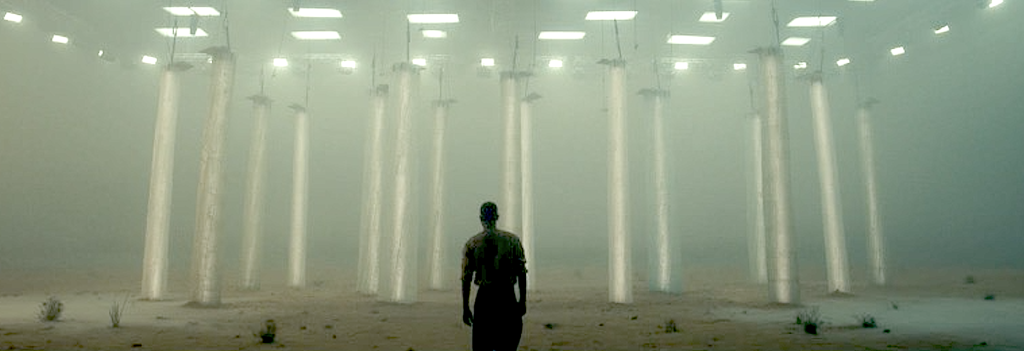
Filming the Wheel of Time’s city of Rhuidean posed an unusual challenge.
Ruhidean- an ancient, abandoned city shrouded in fog- required a different design approach than a traditional set. The plan relied on dense, practical fog combined with visual effects to suggest a vast environment, populated by looming architecture: towering statuary and buildings, the rings, glass pillars, and a massive Avendasora tree. Large partial set pieces were built on the stage to be the bases of these elements, with vfx slated to extend these digitally, creating the upper sections in 3D and completing the illusion of monumental scale.

FINDING OUR WAY
On paper, the setup seemed relatively straightforward.
In reality, it took weeks of planning and testing to devise an approach that could work across the key Rhuidean scenes- including Rand making his way through the Glass Columns, and Moiraine suspended within the mythic Three Rings, witnessing thousands of possible futures.
Director of Photography David Luthur devised a lighting plan and camera strategy to reinforce the scale and geography of the space. Production VFX Supervisor Andy Scrase led the visual effects teams in digitally extending the set beyond its practical builds, deepening the atmospheric fog, and handling the inevitable clean-up work.
Working alongside Thomas with his storyboards, stunt previs, and VFX Supervisor Andy Scrase’s detailed notes, my approach as the on set VFX Supervisor was fairly uncomplicated: capture as much as possible in camera, protect the actors’ performances, and lean on visual effects only when we couldn’t find a practical solution to a problem.
However, reality tends to complicate even the best of plans.
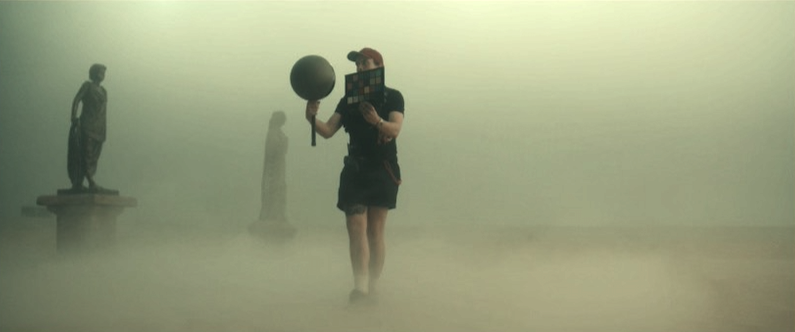
The fog had to obscure unwanted elements while still allowing the camera to capture the scene. The stalwart special effects team had their hands full, as fluctuations in room temperature, drafts, and the air movement of a busy stage made consistent fog density a moving target.
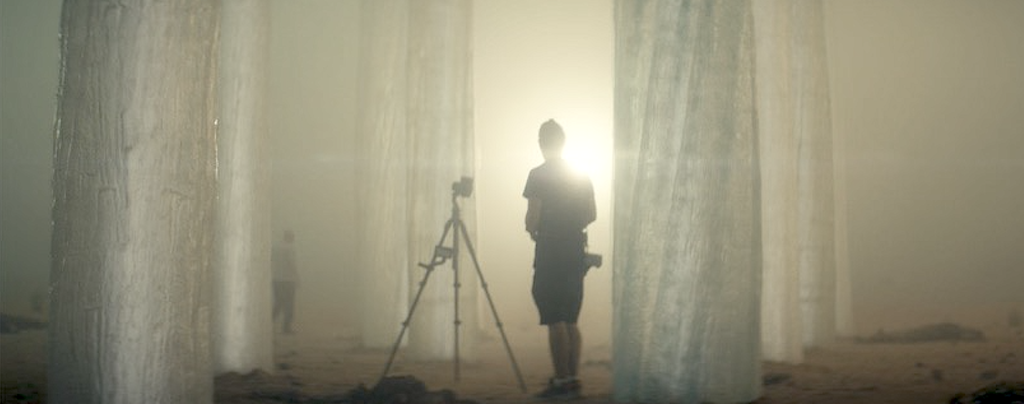
Despite our best efforts, it became clear that visual effects would need to be involved with nearly every shot. Fog inconsistencies, stunt rig removals, visible lighting gear, and crew paintouts- vortex fan and fog machine operators often had to work close to the actors- meant the sequence evolved into a collaborative handoff between production and post-production teams.
HIGH SPEED CHALLENGES
Shooting portions of the sequence at high-speed frame rates introduced another layer of complexity. Director Thomas Napper, DP David Luthur, 1st AD Nick Shuttleworth, and I worked closely to balance camera angles, performer timing, movement, and positioning so we could capture as much of each take in-camera as possible before stunt wires, fog equipment, or nearby crew inadvertently compromised the shot.
Though tense at times, close coordination was the order of the day. With the many moving parts, the uneavering production teams delivered under challenging conditions.

TAKES A VILLAGE
Seeing the material come together during production, it was clear we were creating something special. In the end, the Rhuidean sequences became a blend of skillfully executed practical effects, sensitive photography, and careful stunt work, brought together with a great deal of visual effects artistry in post.

It truly took a village.
I’m proud of the work we’ve done, and lucky to have been part of the effort as the On Set VFX Supervisor. It was a great experience working alongside such a talented group of artists and technicians, especially thankful for the brilliant efforts of a crack VFX team. I look forward to doing it again with these fantastic folks.
Have a look at the sequence here.